Something changed in 2026. Business phone calls did not get less important. They got more urgent. A plumbing company in Texas was losing $40,000 a month to after-hours voicemails. A healthcare clinic
Something changed in 2026. Business phone calls did not get less important. They got more urgent.
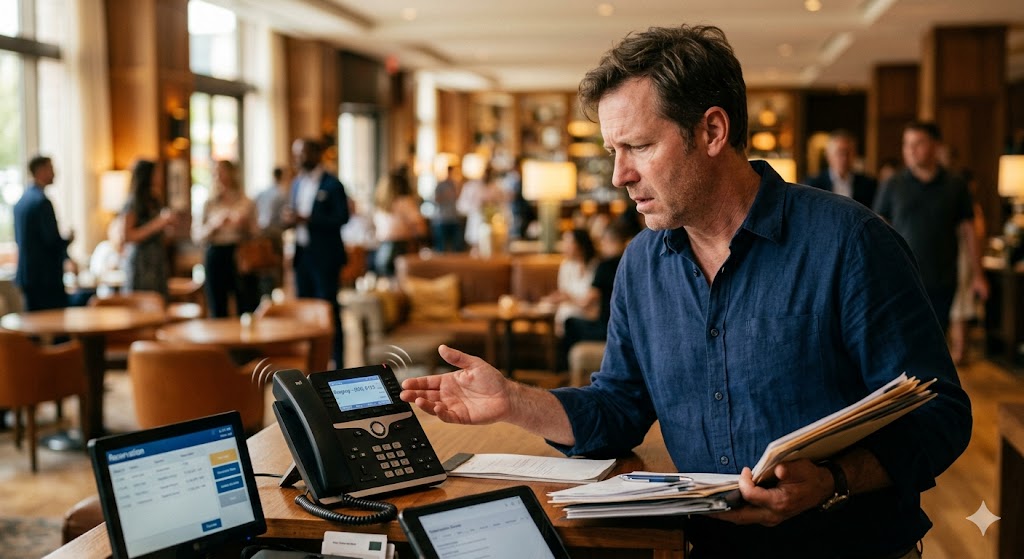
A plumbing company in Texas was losing $40,000 a month to after-hours voicemails. A healthcare clinic was paying overtime just to keep up with appointment calls. A hotel front desk was so slammed during peak season that guests waited seven minutes on hold before hanging up.
These are not edge cases. They are the baseline reality for most small and mid-size businesses trying to stay competitive right now.
The good news: AI phone assistants have caught up to the problem. The question is no longer whether to use one. It is how fast you can get one running.
The Missed Call Math No One Talks About
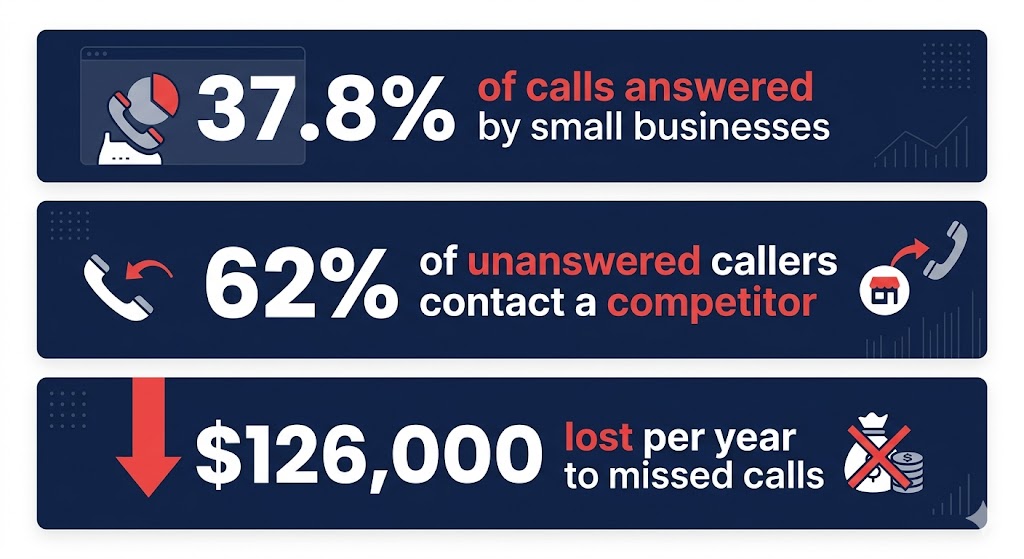
Small businesses answer only 37.8% of incoming calls, according to a 2024 study analyzing 85 businesses across 58 industries (411 Locals). That means roughly six out of ten calls go unanswered.
What happens next is worse. 80% of callers sent to voicemail hang up without leaving a message. And 62% of those unanswered callers do not try again — they call your competitor instead (PATLive, 2025).
Ambs Call Center put a number on it in 2025: the average small business loses $126,000 per year to missed calls. For restaurants, hotels, clinics, and service businesses where the phone is the main booking channel, that number hits harder.
None of this is a staffing failure. It is a structural one. Humans cannot be on call 24 hours a day, answer every call on the first ring, and handle peak volume without dropping something. AI can.
What AI Phone Assistants Actually Do Now
The old model was simple: AI took a message and a human called back. That era is over.
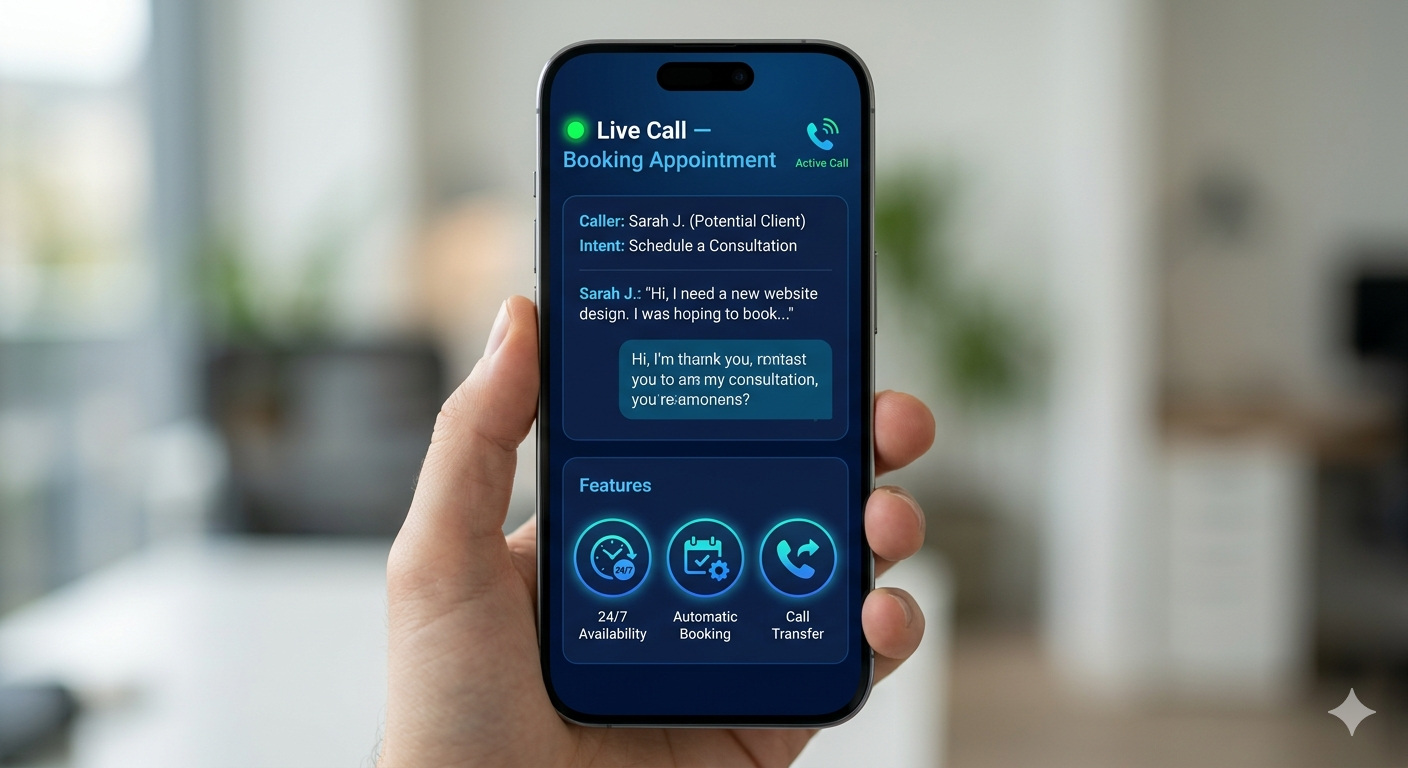
Modern AI phone assistants complete full workflows during the call. They answer questions, book appointments, take orders, handle FAQs, route urgent calls to the right person, and follow up over SMS. The caller gets a resolution. The business gets a record.
At AI Assistant.co, the Phone AI operates with sub-2-second response times and supports multiple languages. It does not sound like a phone tree. It sounds like a person who knows your business.
The industries seeing the biggest impact right now:
Hotels and travel: guest inquiries, room availability, concierge requests, multilingual support
Restaurants and food service: phone orders, table reservations, delivery coordination, menu questions
Healthcare and senior care: appointment scheduling, medication reminders, HIPAA-compliant patient calls
SMBs: general FAQs, appointment booking, post-sale follow-ups, after-hours coverage
Home and consumer services: scheduling, consultations, review requests, real estate inquiries
The Trend Behind the Tool: AI Is Now Infrastructure

There is a broader shift happening. In 2026, generative AI is not a feature businesses add. It is the layer that holds customer communication together.
Google Cloud's 2026 AI Agent Trends report describes this as the "agent leap" — where AI orchestrates end-to-end workflows, not just individual tasks. For customer-facing businesses, that means an AI that does not just answer a question but sees the interaction through to completion.
The voice channel is at the center of this. Onlim's 2025 research on AI phone assistant use cases identified four areas where the technology delivers clear ROI: appointment scheduling, lead qualification, call routing, and FAQ automation. All four are high-volume, repetitive, and expensive to staff manually.
By 2026, voice assistant users in the US are expected to reach 157.1 million (Statista). Businesses that are not ready to meet those users on the phone are losing ground fast.
Cost Is No Longer the Barrier
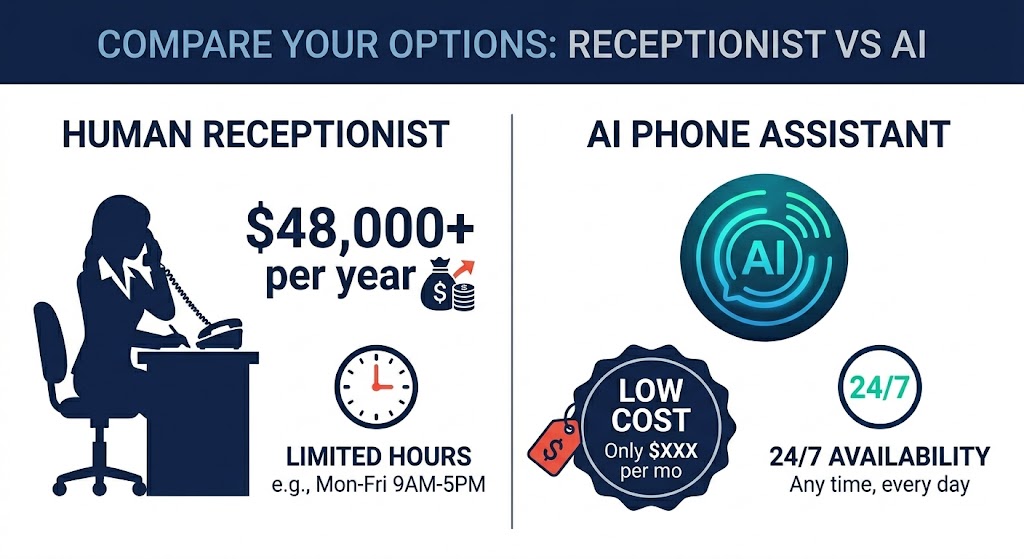
A few years ago, AI phone automation was an enterprise purchase — custom builds, long integrations, six-figure contracts.
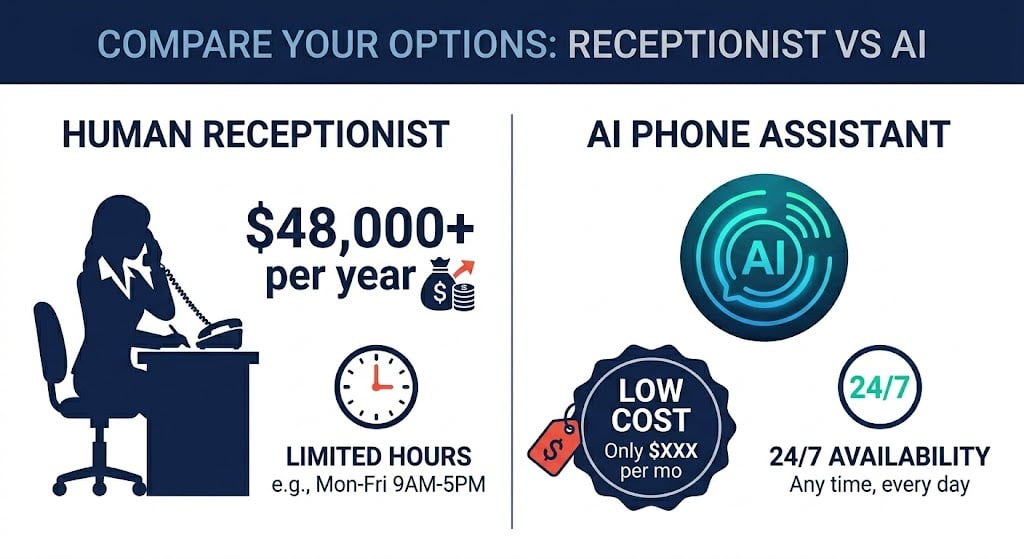
That is not the market anymore. AI Assistant.co deploys in under five minutes. No code, no IT team, no contract. The platform costs 10 to 50 times less than hiring a receptionist and does not call in sick or clock out at 6 PM.
For a business losing even a fraction of that $126,000 annual estimate to missed calls, the math on a free trial is straightforward.
The Real Question in 2026
The question businesses ask is usually: "Is an AI phone assistant right for us?"
The better question is: what happens to the calls you are not answering right now?
Those callers are not waiting. And the businesses that pick up — whether that is a human or an AI — are the ones getting the booking, the reservation, the appointment, the sale.
Start your free trial at aiassistant.co and set up your AI Phone Assistant in under five minutes.